Oops! Something went wrong while submitting the form.
Water-Based vs Plastisol Screenprinting: What’s the Difference?
If you are ordering custom t-shirts, one of the biggest decisions happens before the shirts are even printed.
It comes down to the ink.
Two of the most common methods are water-based screenprinting and plastisol screenprinting. While they can produce similar-looking designs, they perform very differently once worn.
Understanding those differences can help you choose the right option for your shirts.
Feb 28, 2026
min read
Copied!
Compare water-based and plastisol screenprinting. Learn how each method feels, wears, and performs to choose the best option for custom t-shirts.
What Is Water-Based Screenprinting?
Water-based screenprinting uses ink that soaks into the fabric rather than sitting on top of it.
Because of that, the print feels soft, lightweight, and breathable.
At Sunday Cool, our Super-Soft Ink is a water-based screenprinting method designed to keep the shirt feeling like a shirt, even after it is printed.
This method is ideal when comfort matters, especially for shirts that will be worn often.
What Is Plastisol Screenprinting?
Plastisol screenprinting uses a thicker ink that sits on top of the fabric.
This creates a more structured, layered print that is easy to see and feel.
It is often used for bold graphics and high-opacity prints, especially on darker garments.
However, because the ink sits on top of the shirt, it can feel heavier and less breathable compared to water-based printing.
The Biggest Difference: How It Feels
This is where the difference becomes obvious.
Water-based screenprinting creates a print that feels soft and natural, almost like it is part of the fabric.
Plastisol screenprinting creates a thicker layer on top of the shirt. That can make the print feel stiff, especially in larger designs or designs with heavy ink coverage.
Over time, plastisol prints can also feel more noticeable with repeated wear.
If you have ever worn a shirt where the design feels like a patch sitting on top, that is typically plastisol.
Breathability and Everyday Wear
Comfort is not just about how a shirt feels at first. It is about how it wears throughout the day.
Because water-based ink blends into the fabric, it allows the shirt to remain breathable.
Plastisol, on the other hand, can trap heat where the design sits. On larger prints, this can make the shirt feel warmer and less comfortable over time.
For shirts that are meant to be worn often, especially in warm environments, this difference matters.
How They Age Over Time
Both printing methods are durable, but they age differently.
Plastisol prints tend to hold their shape, but over time they can crack or peel, especially if the print is thick.
Water-based prints age more naturally. Because the ink is part of the fabric, it softens with the shirt rather than separating from it.
Many people prefer this worn-in look because it keeps the shirt feeling comfortable even after repeated washes.
Which One Should You Choose?
Both methods have their place, but for most custom t-shirts, water-based screenprinting is the better choice.
If your goal is to create something that people will actually wear again and again, comfort matters.
Water-based printing delivers:
a softer feel
better breathability
a more natural look over time
Plastisol can still work for very bold or highly saturated designs, but for everyday wear, it is often not the preferred option.
Why We Focus on Water-Based Printing
At Sunday Cool, we have spent years refining what makes a great custom t-shirt.
One of the biggest factors is how it feels.
That is why we use water-based screenprinting through our Super-Soft Ink. It allows us to create shirts that look great, feel comfortable, and hold up over time.
Because in the end, the best shirt is the one people keep wearing.
Beyond Ink: Specialty Finishes That Stand Out
In addition to our Super-Soft Ink, we also offer a range of Specialty Inks that create unique, interactive designs.
These specialty options can add another layer of creativity while still maintaining the comfort and quality of our printing process.
Ready to Get Started?
If you are looking for custom t-shirts with a soft, high-quality print, we are here to help.
👉 Ready to Get Started? Start your custom order HERE
People Also Ask
What is the difference between water-based and plastisol screenprinting?
Water-based screenprinting soaks into the fabric, creating a soft, breathable print. Plastisol screenprinting sits on top of the fabric, resulting in a thicker, more noticeable layer.
Which screenprinting method is softer?
Water-based screenprinting is softer because the ink blends into the fabric instead of forming a layer on top.
Does plastisol ink crack over time?
Plastisol ink can crack or peel over time, especially with heavier prints. Water-based prints tend to wear more naturally with the fabric.
Which is better for custom t-shirts?
For most custom t-shirts, water-based screenprinting is the better choice because it provides a softer feel, better breathability, and more comfortable long-term wear.
Share this post
Copied!
Build your brand
"Your Logo Here" has never looked so good - let us guide the way.
JumpStart Youth Rally has always had strong energy in the room. What it hasn't always had is a way to keep that energy going once the weekend ends.
"That's always kind of been a dream of several people — how do we keep in contact post-event. We had decent engagement through social media, posting some recap videos, some photos, some talking points, but..."
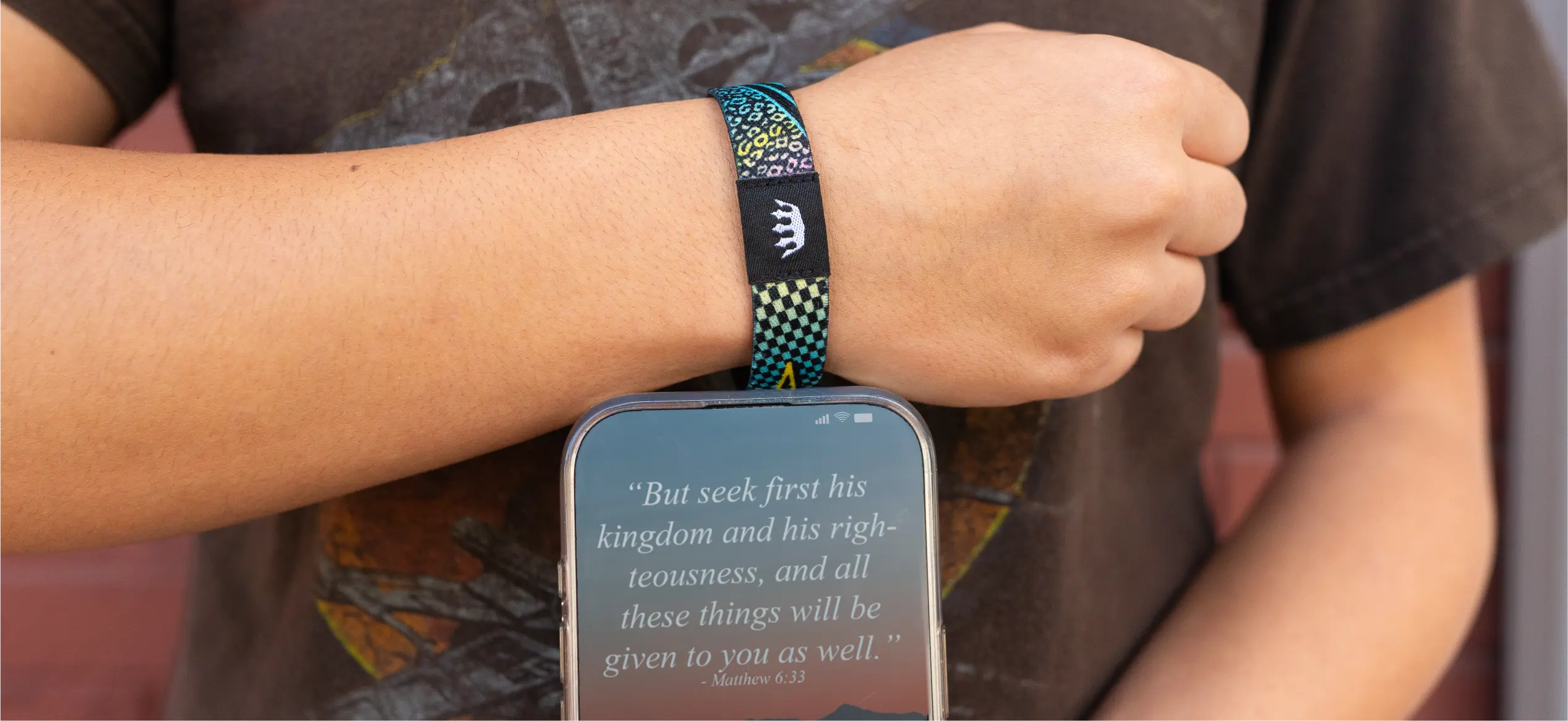
Zac's team had used standard silicone wristbands in years past, and a WootHoop the year before this one — which students loved and actually wore, unlike previous giveaways. But when Sunday Cool introduced Woothoop+, with an NFC chip built into the same soft-woven band, Zac saw an opportunity to do more than hand out a wristband. He saw a way to hand out a direct line to his students that would outlast the weekend.
The Partnership
The order almost didn't happen. Zac placed it just two and a half weeks before the event — while on vacation at Disneyland.
"We got them ordered within a day. I don't even think it was a 24-hour process to get everything turned around, and it was so simple."
Sunday Cool's Project Advisor, Stacia, got the wristbands designed, produced, and delivered five days before the rally kicked off.
"She's been so patient with me, and honestly, she's a miracle worker sometimes. She makes the process so easy. That is why we will keep coming back to Sunday Cool as often as we can."
For the link itself, Zac's team didn't need a new website or a developer. They used their existing church platform (Subsplash) and simply added a page to their current site — no new domain, no extra infrastructure.
"It was actually easier for us to use our church website and just add a special link to that."
The Moment
Wristbands went out at registration Friday afternoon. Some got worn right away. Some didn't — until Friday night, when Zac took the stage, held up his own wristband, and tapped his phone to it in front of the whole room.
"I said, hey, this will also give you all the information you need to know about the weekend. And that's when everyone was trying to get their Woothoops that weren't wearing them previously. They wanted it at that point."
The reaction was immediate: 307 of 355 registered attendees — 86% of the room — connected that weekend.
From there, the team used the link dynamically all weekend long: live schedule updates, breakout room assignments, speaker verses and images pushed the moment a session started. On Saturday, they used it to distribute a digital faith-story worksheet a college student had built for the event — something students could now revisit anytime, just by tapping their wrist.
"We were able to really give them a detailed schedule every time they scanned that wristband... and one of the things we wanted to do especially for this theme, there was a little booklet on how to write your faith story — that was able to be directly put on the Woothoop."
The Result
The weekend ended, but the link didn't stop working. Zac's team repointed the same URL toward daily devotionals tied to the rally's theme — something students could keep engaging with well into the fall.
"It's still on their Woothoop. If they scan it now, they can access that at any time."
Three weeks post-event, engagement had settled into a rhythm: from an initial 50–75 daily scans down to a range of 7 to 30-plus on any given day.
"That's about 10% who are coming back, and we're happy with that. We love that."
The reaction wasn't limited to students, either.
"The adults were the most impressed. I had other youth ministers and chaperones coming up like, how does this work? Tell me how to make this work."
One college recruiter at the event was impressed enough to place his own order — planning to embed his application link directly into a Woothoop+ for his upcoming recruiting season. And Zac isn't waiting for next summer to use his again: he's now handing Woothoop+ out to first-time visitors on Sunday and Wednesday nights, pointed at the church's calendar and event schedule.
On product quality specifically, Zac didn't hold back:
"The designs are fantastic. The shirt quality is like — you can't get any better, super soft. And the ink is just baked right in. So that's why we wanted to give credit where credit was due — you're not just buying a t-shirt."
The Ask
JumpStart Youth Rally isn't a one-off. It's a 28-year tradition that just found a new way to stay connected to the students who show up for it — well past the weekend it happens.
If your church, camp, or ministry is planning an event where you need to get information into people's hands fast, and keep them engaged after it ends, Woothoop+ is built for exactly that.
👉 See how Woothoop+ works, or start your own order HERE.
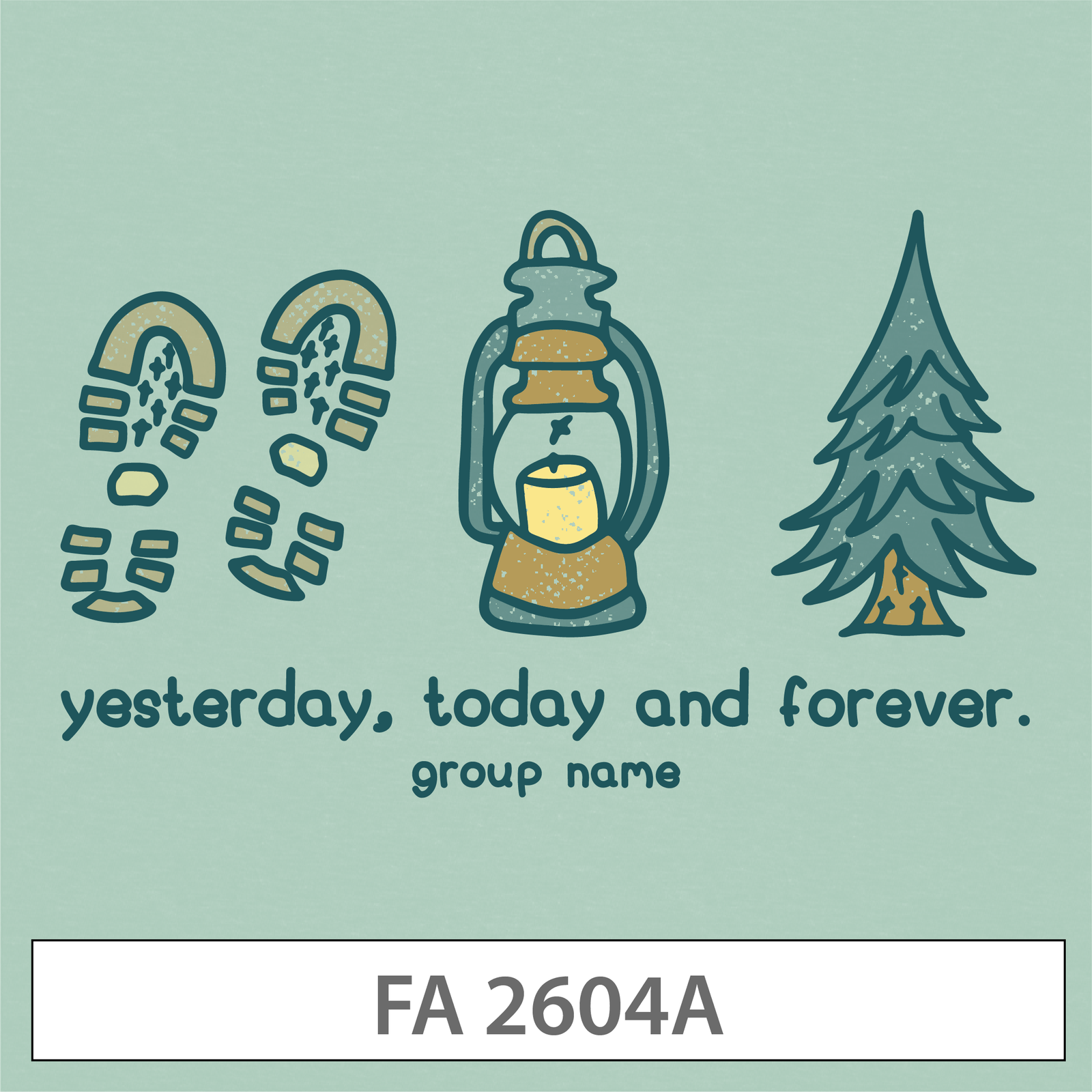
There's something about hiking boot footprints, a glowing lantern, and a pine tree with a campfire glow at its base that just says fall retreat without saying a word.
This design leans into the quiet, cozy side of fall — muted sage green background, soft hand-lettered type, and a color palette that feels more "cabin weekend" than "back to school." The line "yesterday, today and forever" gives it a Scripture-adjacent feel (Hebrews 13:8, if you're looking for the reference) without spelling it out, which keeps it feeling more like a retail graphic than a churchy one.
Why it's trending: Muted, nature-inspired palettes and hand-lettered fonts are everywhere in fall apparel right now — this design taps into that exact look. It's also a natural fit for the Super-Soft Crewneck or Super-Soft Hoodie, since the illustration style pairs beautifully with fleece.
Great for: Fall retreats, camp weekends, small group kickoffs
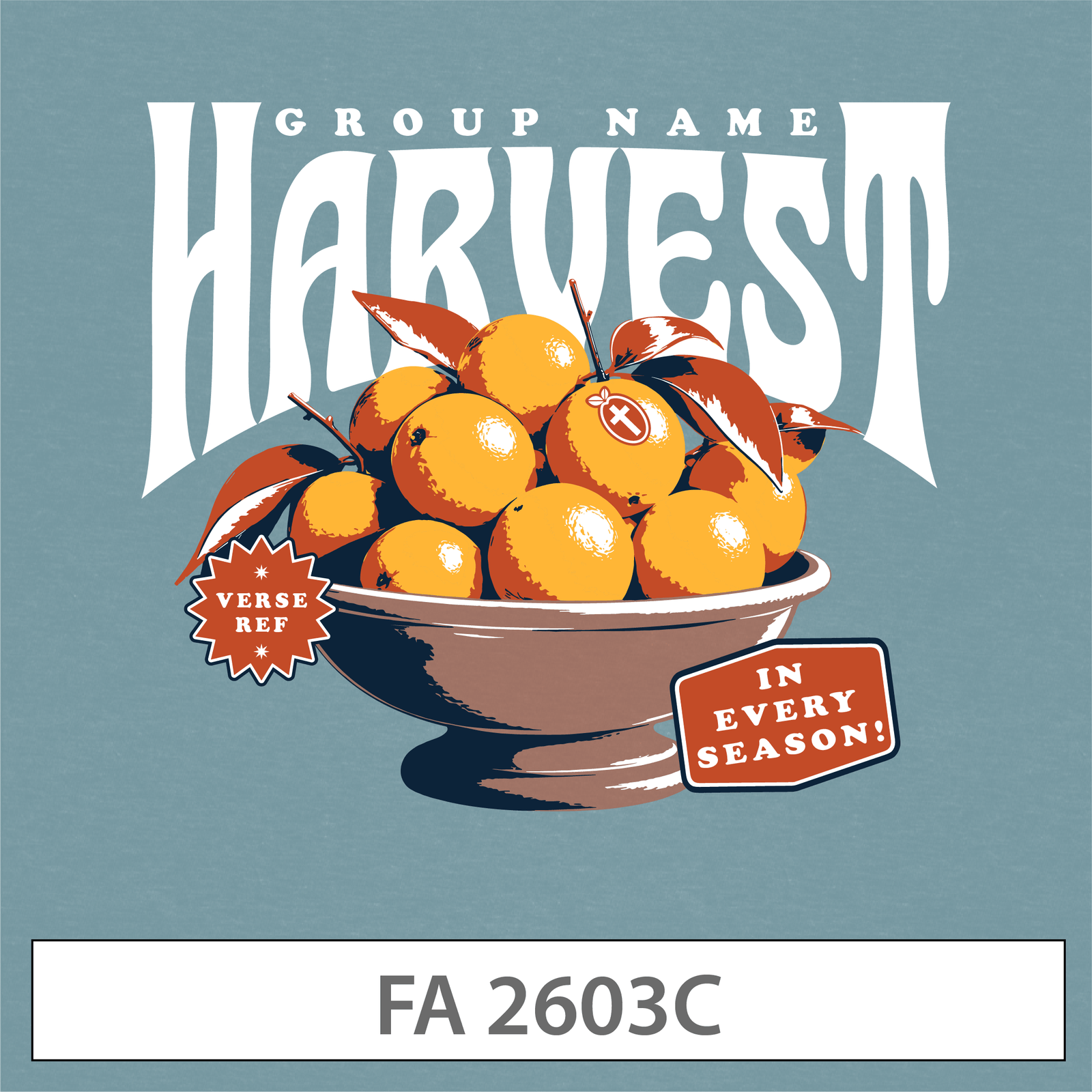
Bold, arched vintage type stacked over an illustrated bowl of oranges — this one has serious "old general store sign" energy, and it's one of the strongest typography moments in this whole lineup.
The small sticker-style tags ("VERSE REF" and "IN EVERY SEASON!") add a layered, collage-like feel that's very on-trend right now, while the warm slate blue and burnt orange color combo keeps it feeling autumnal without going full pumpkin-spice cliché.
Why it's trending: Stacked vintage serif type paired with illustrated still-life elements is one of the biggest design trends in apparel this year — think farmers market posters, not clip art. It's a design that would genuinely look at home on a store shelf.
Great for: Ministry kickoff, harvest festivals, fall Sunday services
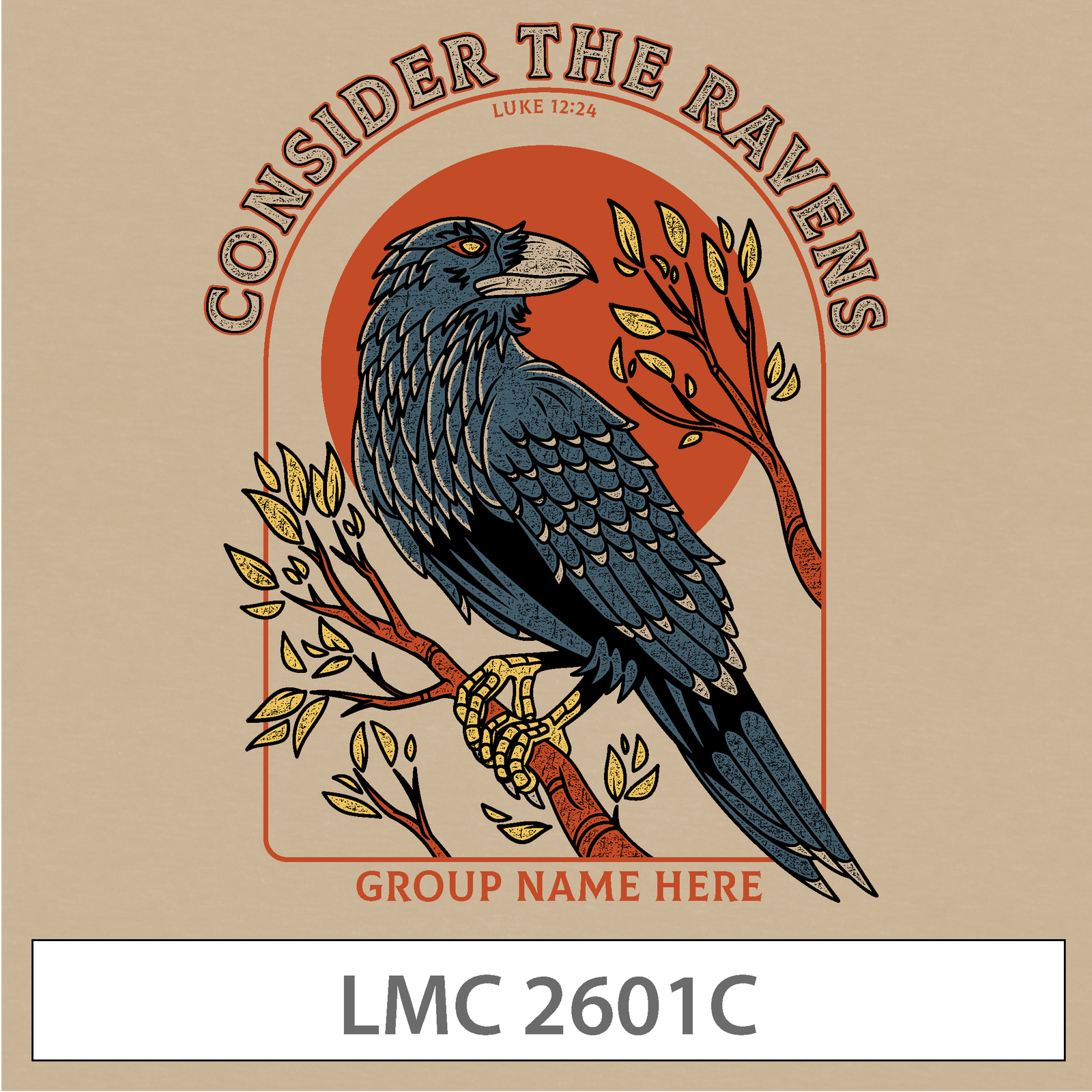
This one's a standout. A finely detailed raven illustration, perched on a branch in front of a warm orange sun, framed inside a badge-style border with "CONSIDER THE RAVENS" arched overhead and the Luke 12:24 reference tucked underneath.
It's easily the most illustrative, artist-driven design of the group — closer to a nature field guide or a national park badge than a typical church tee. The tan background and earthy color palette give it real depth without feeling busy.
Why it's trending: Badge-style illustration with a single, striking animal subject is huge right now, especially in the outdoor and nature-inspired apparel space. It's also a great option if your group wants a design that leads with Scripture and lets the art carry the weight.
Great for: Fall retreats, DNOW weekends, student ministry apparel
Big, bold, collegiate-style lettering stacked over an illustrated acorn and oak leaf, wrapped in a retro groove-line frame — this design is loud in the best way.
The brick red background and cream typography give it a varsity, homecoming-poster kind of energy, while the small "VERSE REF" and "GROUP NAME" tags keep it easy to personalize without disrupting the design.
Why it's trending: 70s-inspired retro typography with rounded, chunky letterforms is one of the most popular design directions across apparel right now — and it photographs incredibly well for social media and group photos.
Great for: Back to school, ministry kickoff, tailgate-style fall events
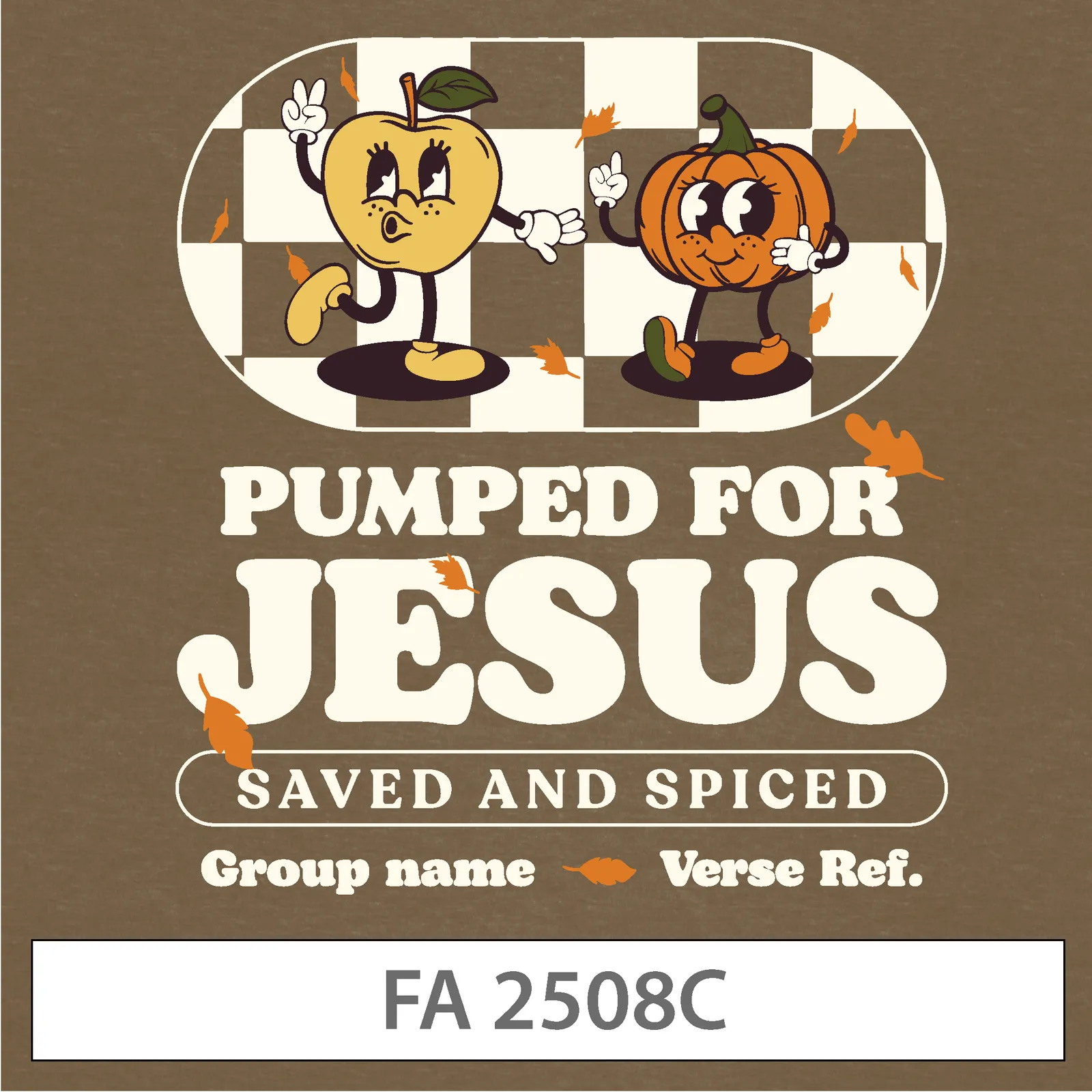
An older design, but still one of our most requested — and it's easy to see why. A dancing apple and pumpkin mascot duo, set against a checkerboard backdrop, paired with bold groovy type reading "PUMPED FOR JESUS, SAVED AND SPICED."
It's playful, a little silly, and exactly the kind of design that gets students excited to actually wear their group shirt outside of church. The retro mascot-character trend has real staying power, and this design is a great example of why.
Why it's trending: Retro cartoon mascots with expressive faces and checkerboard backgrounds have been a consistent apparel trend for a few years running — and for younger student ministries especially, that playful energy tends to outperform more serious designs.
Great for: Youth group fall kickoff, VBS wrap-up events, general fall merch
Every design above is fully customizable — swap in your group's name, verse reference, and color palette, and it's ready to print.
Each design also works across multiple garments, so you're not locked into one product. Most of these were built with both Super-Soft Tees and fleecewear in mind — meaning the same design can carry from a lightweight fall tee into a Super-Soft Hoodie or Super-Soft Crewneck as the weather cools down.
Not sure which one fits your group? A good rule of thumb: if your event leans reflective or outdoorsy, start with Yesterday, Today and Forever or Consider the Ravens. If it leans high-energy or celebratory, Hello, Autumn or Pumped for Jesus is the better call.
People Also Ask
What t-shirt designs are trending for fall right now? Vintage badge illustrations, stacked retro typography, and playful cartoon mascots are all trending in fall apparel this year — all five designs in this post reflect one of those directions.
Can I customize these fall designs with my group's name? Yes. Every design in Sunday Cool's Customizable Design Template library can be personalized with your group's name, verse reference, and color choices.
What garments work best with these fall designs? Most of these designs are built to work on both the Super-Soft Tee and fleecewear, so the same design can transition from a fall tee into a Super-Soft Hoodie or Super-Soft Crewneck.
Are older designs still a good choice, or should we pick something new? Absolutely — a design like Pumped for Jesus has stayed popular for a reason. A strong design doesn't have an expiration date.
Fall is one of the best seasons to make a statement with your group's apparel — cozy palettes, bold type, and just enough personality to make people want to wear it long after the season's over.
VBS is one of the biggest and most predictable merch pushes of the year — which also means it's one of the easiest to plan for well in advance.
The key with VBS is designing around your curriculum theme rather than something generic. Whether your church runs curriculum from Lifeway, Group, Orange, or another publisher, we've built shirt idea guides tailored to specific themes each year — worth a search on our blog once your VBS theme is confirmed.
What tends to work best for VBS:
Super-Soft Tee in youth sizing, since VBS crowds skew younger
Summer camp shirts have a way of sneaking up, since camp planning tends to compete with everything else on the calendar for attention. If you haven't already, our summer camp shirt guide and complete ordering guide walk through design ideas and a full ordering timeline.
What tends to work best for camp:
Super-Soft Tee, built to hold up through a full week of outdoor activity
Vintage badge or nature-inspired graphics for a classic camp feel
Specialty inks like Sun Reveal Ink for outdoor reveal moments
Start planning: 10–12 weeks before camp.
Late Summer: Back to School
Back to school is a short window with a hard deadline — school start dates don't move. Our back to school shirt guide covers design and timing in detail.
What tends to work best:
Super-Soft Tee or Oversized Boxy Tee for a current, wearable look kids will actually take to school
A clean, logo-forward design that doesn't read as "churchy merch"
Sunday Cool's Take Note Express Package — a shirt, sticker, and notebook bundle built specifically for this season
Start planning: 4–6 weeks before the first day of school.
Fall: Ministry Kickoff Season
Kickoff season overlaps with back to school, but it's its own moment — the start of a new ministry year, not just a new school year. Our ministry kickoff shirt guide and Build Your Brand guide both dig into this in depth.
What tends to work best:
A design tied to your whole season's theme, not just kickoff night
Super-Soft Crewneck for a slightly more polished leader/volunteer look
A full Build Your Brand bundle to create cohesion across shirts, stickers, and handouts from day one
Start planning: 4–6 weeks before kickoff.
Fall: Retreat and DNOW Season
Fall is retreat season, and depending on your ministry, that might mean a traditional fall retreat, a DNOW weekend, or both. We've covered each separately: our fall retreat guide for camp directors and our DNOW shirt guide.
Many DNOW weekends are built around curriculum from publishers like Lifeway or The Gospel Project, so it's worth checking what your group is using before locking in a design direction.
What tends to work best:
Super-Soft Tee for the weekend, Super-Soft Hoodie for cooler evenings
A single strong theme or verse rather than a schedule-heavy design
Woothoop+ for DNOW specifically — tap-to-open schedules, small group signups, and session notes are a natural fit for a weekend that moves fast
Start planning: 6–8 weeks before the event.
Winter: Winter Retreat Season
Winter retreats bring their own set of design and product considerations — colder weather, indoor lodges, and often a more reflective tone than summer camp.
What tends to work best:
Super-Soft Hoodie or Super-Soft Crewneck as the anchor piece instead of a short-sleeve tee
Puff Ink for raised, textured logos that pair especially well with fleece — it's one of the most popular ink choices for hoodies and crewnecks this time of year
Beanies as a practical, on-theme add-on for cold weather
Start planning: 6–8 weeks before the retreat.
Winter: Holiday Events
Christmas services, holiday outreach events, and end-of-year celebrations round out the calendar. These tend to be lower-volume but high-visibility moments — often the biggest attendance Sundays of the year.
What tends to work best:
A clean, giftable design — something visitors and first-time guests would be glad to take home
Super-Soft Long Sleeve or Super-Soft Crewneck for the colder season
Start planning: 6–8 weeks before your event, especially with holiday production schedules running tighter across the industry.
Year-Round: Baptisms and Milestone Moments
Unlike the seasonal pushes above, baptism shirts and other milestone merch tend to happen on their own schedule throughout the year. Our baptism shirt guide covers how to design something meaningful for these moments, including how churches are using Water Reveal Ink to visually reflect the moment itself.
Building the Calendar Backward
The single biggest lesson across every season: work backward from your event date, not forward from "whenever we get around to it."
A simple rule of thumb across almost every event type on this list — start the design conversation 4–8 weeks out, depending on how custom your design needs to be. Sunday Cool's 72-hour turnaround after art approval is fast, but that clock only starts once your design is locked and your sizes are in.
If you're ever short on time, a Customizable Design Template is the fastest way to skip the blank-page problem and get to an approved design in days, not weeks.
People Also Ask
What's the busiest season for church merch? Spring (VBS) and fall (kickoff, retreats, and DNOW) tend to be the two busiest windows, with back to school bridging the two in late summer.
How far in advance should we plan seasonal church merch? As a general rule, start the design conversation 4–8 weeks before your event, with more lead time for larger or more custom orders.
Do different seasons call for different products? Yes. Lighter apparel like the Super-Soft Tee tends to fit spring and summer events, while Super-Soft Hoodies, Crewnecks, and Long Sleeves are better suited for fall and winter.
Is there a way to keep our merch cohesive across the whole year? Sticking to one core color palette or design system — and leaning on bundles like Build Your Brand — helps keep your church's look consistent across every season.
No matter what season you're planning for, the same principle holds: start early, keep the design simple, and choose apparel people will actually want to wear again.
👉 Ready to Get Started? Start your custom order HERE
%201.avif)


.webp)
-p-1600.png)
.png)